When plan sponsors compare Pharmacy Benefit Managers (PBMs), the administration fee is an obvious place to start. It appears in the proposal and the contract, so it is one of the easiest costs to see.
But the administration fee may represent only part of what a PBM earns from your pharmacy benefit.
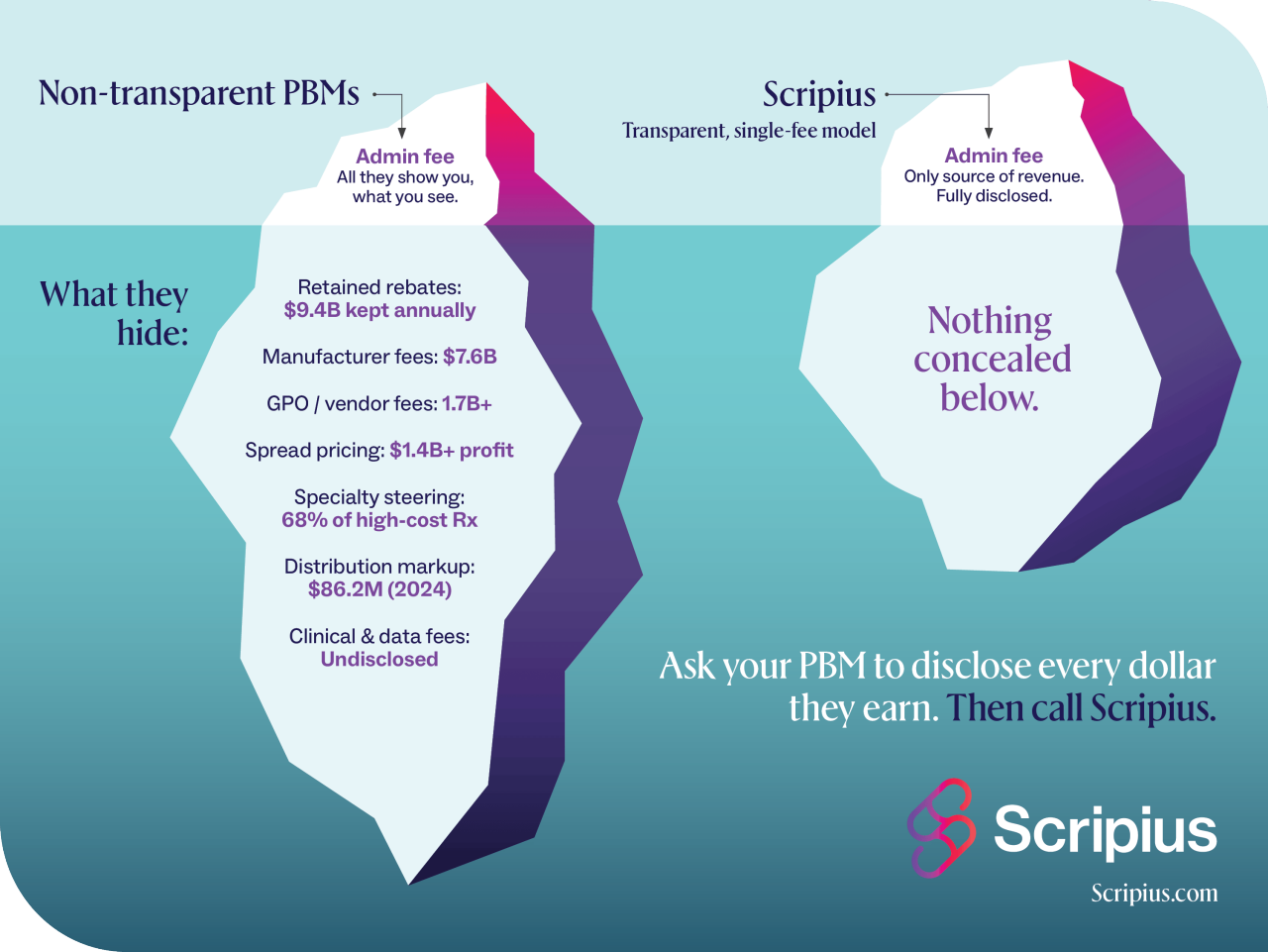
The iceberg graphic shows why. Above the waterline sits the visible administration fee. Below it are other potential sources of PBM revenue, from retained rebates and spread pricing to manufacturer fees and specialty pharmacy revenue.
How traditional PBMs make money
The three largest PBMs in the U.S. process about 80% of prescriptions.1 But administration fees are only one potential source of PBM revenue. Rebates, spread pricing, manufacturer fees, and specialty pharmacy revenue can also affect what your plan ultimately pays.
Retained rebates
Drug manufacturers pay rebates and other compensation to PBMs in exchange for formulary access and other services. One industry estimate puts total annual rebate revenue at $72 billion and estimates that PBMs retain 13%, or about $9.4 billion, rather than pass it back to plan sponsors.2
How much reaches the plan depends on the PBM and the contract. Without full transparency, plan sponsors may not know the total amount collected or retained.
Spread pricing
With spread pricing, a PBM reimburses a pharmacy one amount for a prescription and charges the health plan a higher amount. The PBM keeps the difference.
An FTC analysis found that the three largest PBMs generated more than $1.4 billion through spread pricing on 51 specialty generic drugs from 2017 through 2022.3 The finding shows how spread pricing can add another layer of cost that may not appear in the administration fee.
Manufacturer and GPO fees
Rebates are not the only payments PBMs may receive from drug manufacturers. PBMs and their affiliated group purchasing organizations (GPOs) can also collect fees for services such as data analytics, formulary management, rebate administration, and market access. One industry analysis estimates PBM compensation from manufacturer service fees and related vendor fees at more than $7.6 billion.4
Those payments represent another source of PBM revenue that plan sponsors may want to examine as part of the total cost of their pharmacy benefit.
Specialty steering
Many large PBMs own or have ties to specialty pharmacies. That structure can create an incentive to direct prescriptions to affiliated pharmacies.
In 2023, pharmacies affiliated with the three largest PBMs received 68% of specialty drug dispensing revenue.5 For plan sponsors, the key question is whether the pharmacy arrangement delivers the best net cost for the plan and its members.
Data and portal fees
Plan sponsors also rely on pharmacy claims, data, and reports to understand prescription costs and utilization. Depending on the contract, PBMs may charge separate fees for reporting, analytics, portal access, or other services. These costs deserve the same scrutiny as other PBM revenue sources.
The question worth asking
Plan sponsors may know these revenue streams exist and still lack a clear picture of how much their own PBM earns from them.
That makes one question especially important: Do you know every way your PBM makes money from your pharmacy benefit? If the answer is no, ask your PBM to disclose each source of revenue tied to your plan. That includes retained rebates, spread pricing, manufacturer and GPO fees, specialty pharmacy revenue, and other administrative or service fees.
The goal is simple: understand the PBM’s total compensation, not just the administration fee you can easily see.
A different way to structure the relationship
Scripius uses a different model. It earns revenue from one source: a single, disclosed administration fee. No retained rebates. No spread pricing. No manufacturer or GPO fees. No specialty pharmacy revenue. No data portal fees.
Because Scripius does not rely on those additional revenue streams, rebates and other savings can flow back to the plan rather than become another source of PBM profit.
Many clients save an average of 15% - 20% in their first year.
Start with the right question
Before your next renewal or RFP, ask your PBM to disclose every dollar it earns from your benefit. Then compare the full picture.
Sources:
Related articles